Tucson-area students are taking advantage of school choice by attending more charter schools, as well as other nontraditional schools and programs. “Families and students are looking for choice and finding it in charters,” said Association President and CEO Eileen Sigmund.
Author: acs@@dmin
Arizona Agribusiness & Equine Center and Paradise Honors High School were named some of the top 500 high schools in the country by Newsweek, including in a separate list of best high schools that serve a high percentage of students in poverty.
Association President and CEO Eileen Sigmund wrote an op-ed to the Sahuarita Sun to dispel myths regarding charter school achievement and whether or not charter schools accept all students.
School finance has been the topic of lively debate in Arizona, recently. Parents, school leaders, and politicians from both political parties have openly expressed their concern over years of budget cuts, while newspapers continue to report school funding as a major concern of educators, expressed at the Superintendent’s “We Are Listening” tour. Add to that a recent report by the U.S. Census Bureau that ranks Arizona at or near the bottom in per pupil spending, and it’s clear that school funding is an issue that needs to be addressed.
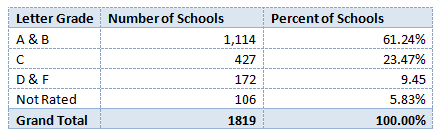
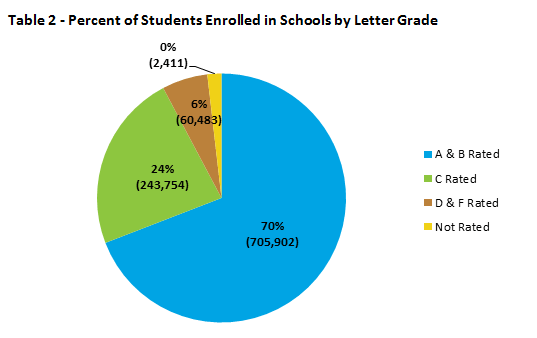
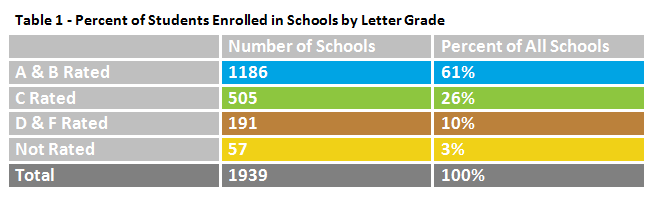
Although recent discussions about school funding would make it seem that urgent reform is needed, data reported from the Arizona Department of Education earlier this year paints a different picture. Every year, the Department assigns letter grades to public schools based on a combination of their students’ performance on standardized tests and academic growth. Although these grades are not perfect measures of school quality, they offer insight into how a school is serving its students. When school letter grades were released to the public last August, education advocates were pleased to announce that schools were not only doing well, but that they had improved from the previous year. Our analysis showed that that 61 percent of public schools received an A or B rating and that nearly 70 percent of public school students attended an A or B rated school. Looking at these statistics, it seems that Arizona’s public schools are doing quite well.
Taken together, the fact that Arizona ranks at or near the bottom in per pupil spending at the same time it enrolls 70 percent of its students in A and B rated schools may be seen as an argument against increasing school funding. In fact, these data could be interpreted to indicate that perhaps Arizona public schools are fine just the way they are.
We believe, however, that this is not the case. As we’ve written previously, Arizona’s school letter grades are not reflective of the true state of education in Arizona. This is problematic for school funding and education reform advocates because, by our state’s own measures, Arizona schools appear to be doing well despite years of budget cuts. However, consider the fact that in 2013, Arizona ranked 42nd in fourth-grade reading scores and 22nd in fourth-grade math scores on the National Assessment of Educational Progress. Also, roughly 44 percent of high school graduates do not enroll in post-secondary institutions upon graduation and only 19 percent receive a diploma from a four-year institution six years after graduating from high school. These data surely paint a very different picture of school performance. It is plausible to assume that in order for Arizona to improve on these external measures of student performance, schools will need additional resources. As the old adage states: the definition of insanity is doing the same thing over again and expecting a different result.
So then, if we believe that our schools are likely to require more resources then we must be clear about student outcomes. This is not to diminish the work of teachers, principals, and students at A and B rated schools. Earning these labels requires significant effort and should be commended. However, we must also acknowledge that earning an A or B, in a system that essentially norms public school performance, does not mean that students are college and career ready. If Arizona students are to receive the education that they deserve, then we must do more to provide them with access to rigorous curricula, excellent teachers, and resources that will prepare them to be happy and productive citizens in the 21st Century. Doing this, however, costs money.
In the coming months, policy makers, educators and business leaders plan to address some of the state’s most pressing education issues. The Governor’s Classrooms First Initiative Council is faced with the daunting task of school finance reform. At the same time, the Arizona State Board of Education and the Department of Education will begin redesigning A-F letter grades.
The Association will play an active role as technical advisors on both issues. As we advocate for increased funding for students, we will also be clear to decision makers that Arizona students deserve better schools.
Empower College Prep students and families received a pleasant Back-to-School surprise last week when they returned to campus for orientation.
The students each received four free uniforms, a backpack, hygiene kit and free books to help them improve their reading, courtesy of Operation School Bell, a philanthropic partnership between Phoenix Rotary 100, the Assistance League of Phoenix and BHHS Legacy Foundation.
The program aims to outfit underserved students with new clothing, shoes and other essential items.
Our 2015 Charter Awards will recognize the accomplishments of our exceptionally skilled and dedicated K-12 charter teachers, leaders and schools.
These educators and schools are responsible for overseeing substantial academic improvement at their schools, establishing sustainable business practices, designing highly ambitious goals for their schools, and showing valid achievement and growth data.
The awards are divided into four categories: School of the Year, Transformational Leader of the Year, Business Leader of the Year and Teacher of the Year.
We will honor award winners on Oct. 28 at our Charter Awards Celebration at the Hotel Palomar in downtown Phoenix.
[pexcirclecta pex_attr_small_title=”Celebrate Excellence” pex_attr_title=”2015 Arizona Charter Awards” pex_attr_button_text=”Nomination Forms” pex_attr_button_link=”http://azcharters.org/charter-awards/” pex_attr_button_link_open=”same” pex_attr_button_color=”00a4e4″][/pexcirclecta]
The Arizona Republic published an op-ed from Association President and CEO Eileen Sigmund that addressed a number of mistruths regarding charter schools not accepting all students. Sigmund notes that public charter schools are bound to the same laws as district schools to accept all students, including those who require specialized instruction.
Eileen Sigmund, president and CEO of the Arizona Charter Schools Association, sat down with 3TV to discuss school funding cuts and how the cuts will affect the state’s charter school movement and future school openings.
Arizona Attorney General Mark Brnovich issued an opinion that favors our small charter schools in the Small School Weight funding issue. Brnovich’s opinion makes it clear that the Governor and Legislature never intended to enact an immediate 100 percent cut to the state’s smallest charter schools.
The Arizona Supreme Court refused to hear lawsuit on student equity. While we are extremely disappointed with the Court’s decision, we will continue our fight for Arizona charter students and schools.